


In the world of industrial hardware manufacturing, particularly when it comes to separating zippers, the terms right-hand zipper and left-hand zipper describe important structural distinctions that hold practical significance for both manufacturers and end users.
These specifications affect ease of use and the standardization of products across different regions of the world.
Difference between left-hand and right-hand zippers
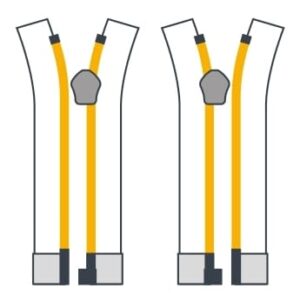
The key difference between right-sided zippers and left-sided zippers lies in the orientation of the insert pin (the guide pin) during fastening:
- Left-hand zipper — often referred to as an “American” zipper. When fastening, the insert pin is held in the left hand, while the slider is moved with the right hand. This standard is most common in North America.
- Right-hand zipper — the more common standard in most countries worldwide, including Europe and Ukraine. When fastening, the insert pin is held in the right hand, while the slider is moved with the left hand.
Thus, the distinction is not about functionality or durability but about ergonomics and the user’s accustomed orientation, determined by regional manufacturing standards and traditions.
Applications and choices for industrial users
For manufacturers of clothing, footwear, bags, outdoor gear, and other products that use separating zippers, understanding this difference is critical.
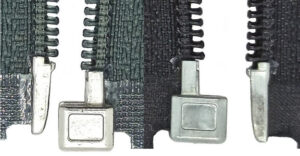
- Global and domestic markets. Companies targeting international markets must consider regional preferences. If you are exporting to the USA or Canada, you will likely need left-sided zippers to meet local consumer habits. For European and Ukrainian markets, however, right-sided zippers remain standard.
- Standardization and compatibility. Choosing one zipper type can help optimize production, procurement, and inventory management. However, to maintain flexibility and meet diverse requirements, leading hardware manufacturers offer both options. For example, the manufacturer Molniya provides open-end zippers of types T6 and T6 reverse, available in both left-opening and right-opening versions. This allows Ukrainian producers to easily adapt their products for various export markets without changing suppliers.
- Ease of usage. While most people can adapt to any zipper type, having a zipper aligned with the “usual” fastening direction increases comfort for the end user, especially in items that require frequent use (e.g., outerwear). For Ukrainian consumers, the right-hand zipper is the familiar standard.
- Design and functionality. In some cases, for specific design concepts or functional requirements, the choice of zipper orientation may play an additional role, although it is usually not the main criterion.
Conclusion
The right-hand and left-hand zippers are not merely two versions of the same product — they reflect the adaptation of manufacturing to global and regional consumer standards.
For industrial buyers, this means making an informed choice based on target markets, standardization requirements, and ensuring maximum comfort for the end user. Ukrainian manufacturers who understand these nuances can successfully meet the needs of both domestic and international markets.
