


In today’s highly competitive travel luggage market, the quality of every component plays a crucial role in shaping brand perception, fostering customer loyalty, and reducing return-related costs. Among all the structural elements of a travel suitcase, the zipper is undeniably one of the most important — it directly affects the functionality, durability, and security of the final product. Choosing the right type of zipper, its size, material, and supplier is a strategic decision that requires a deep understanding of both technical specifications and practical performance requirements.
Two primary types of zippers are commonly used for travel bags and suitcases: coil (also known as spiral) zippers and metal zippers. Each type has its unique characteristics and suitability depending on the design and manufacturing needs.
Types of zippers for travel suitcases
1. Coil (spiral) zippers
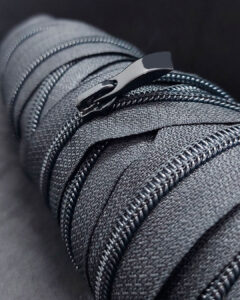
Coil zippers dominate in the mass production of travel luggage due to their flexibility and cost-efficiency. These zippers are either sewn onto the tape or woven into it during the production process. Their advantages make them an attractive option for both manufacturers and commercial use:
- Cost-effectiveness: Compared to metal zippers, spiral zippers are generally more scalable and less expensive to produce, helping reduce the cost of the overall product.
- Ease of manufacturing: The flexibility of the spiral construction simplifies cutting, sewing, and mounting into complex bag designs, speeding up production and reducing error rates.
- Excellent performance in use:
- Flexibility and load resistance: The spiral can endure lateral pressure and tight packing in the suitcase, reducing the risk of tape tearing or link breakage. This leads to fewer product returns due to zipper failure.
- Deformation resistance: Even if the teeth are temporarily distorted, they return to shape, ensuring continued function and higher user satisfaction.
- Lightweight: Spirall zippers help reduce the total weight of the luggage, which is a key benefit under airline weight restrictions.
- Corrosion resistance: Plastic-based materials eliminate the risk of rust, making these zippers reliable in various climate conditions.
- Available in various sizes: Standard zipper sizes for suitcases include woven T6 and T8, and sewn-on P7 (less commonly P10). Choosing the proper zipper size helps match the strength to the expected load.
- Optional features:
- Double coil zippers: Offer enhanced tear resistance and added puncture protection — valuable for securing contents and gaining a competitive advantage.
- Water-resistant options: With special coatings or rubberized tapes, these zippers can provide moisture protection, expanding product functionality.
2. Metal zippers
Although less common in mass-market travel bags, metal zippers are still used for travel suitcases in premium or specialized segments where perceived durability and classic styling are important.
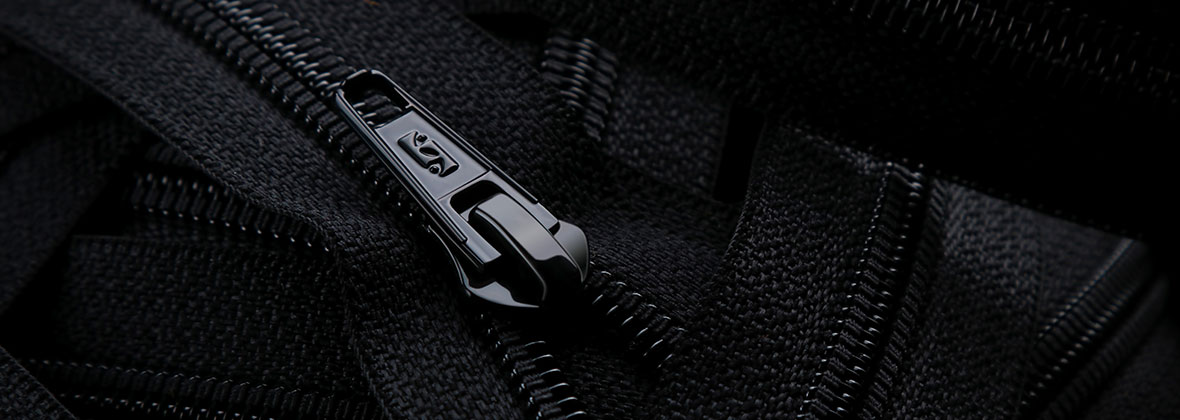
Made from metal teeth attached to the tape, these zippers offer:
- Premium look and feel: Many consumers associate metal zippers with durability and long-term reliability, which can elevate brand image.
- High abrasion resistance: Metal teeth resist wear, supporting extended product life during regular use.
- Secure locking: Well-crafted metal zipper teeth provide a very strong and tight closure.
However, they come with certain technical and commercial challenges:
- Lack of flexibility: The rigid structure can make packing and closing overfilled suitcases more difficult, increasing strain on seams and the zipper itself.
- Point failure risk: A single broken or missing tooth often disables the entire zipper, requiring complete replacement — a costly repair for both the manufacturer and consumer.
- Heavier and more expensive: Metal zippers add weight and typically cost more to produce than spiral zippers.
- Corrosion potential: Though modern alloys reduce the risk, exposure to moisture can still lead to rust or oxidation, affecting performance.
Critical factors in zipper selection for travel luggage manufacturing
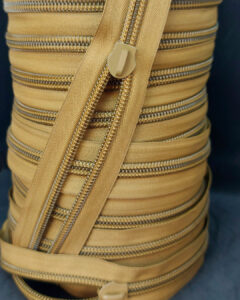
For travel bag and suitcase manufacturers, a business-focused approach to zipper selection must consider more than just type. Key technical specifications include:
- Zipper size: T6 and T8 are industry standards for main compartments, balancing strength and flexibility for typical load scenarios. Using smaller gauges for primary closures is not advisable for quality products.
- Material and supplier quality: The performance of the zipper depends on the quality of every element: tape (resistance to abrasion and color stability), teeth/spiral (consistent sizing and bend resistance), and slider (casting quality and mechanical reliability). Collaborating with suppliers who offer strong quality control and verified testing (e.g., cycle testing, tensile strength) is essential.
- Slider construction: Sliders must be made from durable alloys and include a reliable mechanism (auto-lock, non-lock, or semi-auto-lock depending on needs). Smooth operation is a sign of well-aligned teeth. Lock-ready holes for padlocks are also a standard security requirement in luggage.
- Mounting type: Most travel cases use close-end zippers with one or two sliders, ensuring seam integrity and secure closure.
Conclusion
Choosing a zipper for a travel suitcase is more than a technical choice — it’s a strategic business decision that directly impacts product quality, customer satisfaction, and overall profitability. While spiral zippers in T6, T8, and P7 sizes offer a universal and cost-effective solution for most travel bags, it’s crucial to pay close attention to material quality, specification compliance, and supplier reliability — regardless of the type of zipper chosen.
Investing in high-quality zippers is an investment in product longevity, brand reputation, and sustainable growth in the global travel luggage market.
