


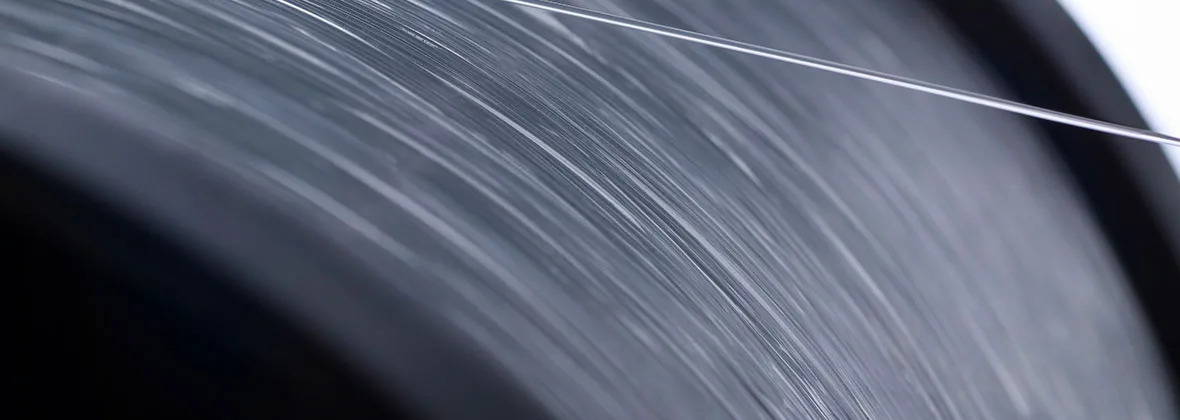
Monofilament is a synthetic material that consists of a single continuous fibrous element, usually created through the extrusion of polymers or other materials. It differs from multifilament threads in that it consists of a single element with a clear structure and uniform thickness throughout its entire length. Due to its specific structure, monofilament is widely used in various industries such as textiles, medicine, fishing, plastic production, and packaging.
For industrial consumers, monofilament is a versatile material used in the production of various products: from filtering materials to specialized nets and fabrics. Thanks to its unique properties, this material helps create products with high technical characteristics.
Why is Monofilament Needed?
The industrial application of monofilament covers different market segments, including:
- Fabric and net production. Used to create strong and wear-resistant fabrics that have high resistance to external influences such as moisture, ultraviolet radiation, or chemicals.
- Filtration. to its homogeneous structure, monofilament allows the creation of high-precision filters for liquids and gases. This is particularly relevant in the chemical, pharmaceutical, and food industries.
- Packaging Used in the production of bags and nets for storing products and other materials, where strength and long service life are required.
- Fishing and agriculture. In fishing equipment, it is used to make strong and elastic fishing nets and lines. In agriculture, it is used to support and protect crops.
Due to its properties, monofilament helps optimize production processes, improving product quality and ensuring the long-term operation of finished products.

Monofilament Properties
Monofilament has several key properties that make it indispensable in industrial use:
- Strength. High strength allows monofilament to withstand large loads, making it ideal for use in products where reliability is crucial.
- Elasticity. Monofilament possesses a certain degree of flexibility, allowing it to withstand deformations without breaking. This is particularly useful in the production of nets and fabrics that are subjected to constant mechanical stress.
- Resistance to external Factors. Synthetic monofilament is usually resistant to the effects of ultraviolet light, water, and chemicals, which significantly prolongs the service life of products made from it.
- Precision in manufacturing. Due to its high extrusion accuracy, monofilament can have a uniform thickness, which is important for the production of filters and other technical materials.

Which Monofilament is Better?
The choice of an appropriate type of monofilament depends on specific needs and operating conditions. There are several types of materials on the market, from which fittings are made:
- Polyamide monofilament. Has high strength and resistance to abrasive wear, often used in the textile industry and for making fishing nets.
- Polypropylene monofilament. Lightweight, chemically resistant, and waterproof; used for filtration and packaging.
- Polyester monofilament. Known for its UV resistance and high dimensional stability. Used in the production of geotextiles and other technical materials.
The best monofilament is the one that meets the specific requirements of your production. For example, for filtering chemical liquids, it is better to choose polypropylene thread due to its high resistance to aggressive environments. For outdoor applications, polyamide or polyester threads that withstand UV exposure and other climatic conditions are suitable.
How to Choose a Monofilament?
When choosing, it is important to consider several key factors:
- Operating conditions. Determine under what conditions the finished product will be used. For wet or chemically aggressive environments, it is better to choose polymers resistant to water and chemicals.
- Mechanical load. Assess the load on the monofilament. For heavy structures requiring tensile strength, polyamide or polyester threads are ideal.
- Resistance to external factors. If the thread will be used outdoors, choose materials resistant to UV exposure and temperature fluctuations.
- Precision requirements. For high-precision applications such as filtration, precise dimensional stability of the thread is important.

Conclusion
Monofilament is a versatile material widely used in industry due to its unique properties. The choice of the right monofilament depends on the specifics of your business and production conditions. From its mechanical strength and chemical resistance to elasticity and manufacturing precision, all these characteristics make monofilament a key element in many production processes.
