


The zipper is one of the most common and convenient fasteners used in modern clothing, footwear, bags, and even technical equipment. Although zippers seem like an everyday item today, the zipper history spans over a century and is associated with several remarkable inventors.
Who invented the zipper?

The invention of the zipper fastener is linked to the American engineer Elias Howe, who patented a device resembling the modern zipper in 1851. His invention was called the “Automatic, Continuous Clothing Closure”. However, Howe’s design was quite complex and inconvenient to use, preventing it from gaining widespread adoption.
On November 7, 1891, another inventor, Whitcomb Judson, received a patent for a “shoe fastener”. Judson designed it to simplify the fastening process of footwear. He even demonstrated his invention at the World’s Fair in Chicago that same year. However, this model was also not practical enough to become popular.
When and what year was the zipper invented?
A real breakthrough in the invention of the zipper occurred in 1913 when Swedish-American engineer Gideon Sundback improved Judson’s design. Sundback developed a system consisting of two rows of interlocking teeth that were connected by a slider. He obtained a patent for his invention in 1917 under the name “Separable Fastener”. This version of the zipper was much more user-friendly and became the predecessor of the modern zipper.

Evolution and popularization
Initially, zippers were primarily used in military uniforms and specialized clothing. For example, in the 1920s, the U.S. military began incorporating zippers into flight suits, ensuring quick and reliable fastening in extreme conditions.
Gradually, zippers found their way into everyday apparel. In the 1930s, French fashion designer Elsa Schiaparelli was the first to introduce zippers into high fashion, helping to popularize them among the general public.
Key milestones in the popularization of the zipper:
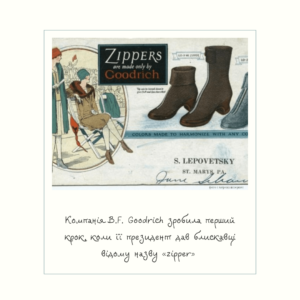
- The B.F. Goodrich Company was the first to widely promote the zipper. The company’s president named it “zipper” due to the distinctive sound it made. The first product featuring zippers was rubber boots called Zipper Boots.
- The fashion house Hermès recognized the potential of the zipper and incorporated it into leather golf jackets. This was a breakthrough in the fashion industry, and the zipper even became known as the “Hermès fastener”.

- Children’s clothing manufacturers began using zippers extensively, as they proved to be more convenient than buttons. The famous slogan “Your children can dress themselves!” cemented the zipper’s popularity.
- In 1937, French designers made the zipper a central element of their collections. Esquire magazine declared it “the best thing that happened to men’s trousers”.
- Jean Claude was the first designer to use zippers on men’s trousers, establishing them as a key feature in men’s fashion.
Modern Innovations
Today, the zipper is not only a convenient clothing fastener but also a subject of continuous innovation. There are waterproof, fire-resistant, and anti-magnetic zippers used in various industries, from sportswear to space technology.
Key Advantages of Modern Zippers:
- Waterproofing: provides moisture protection in sports and outdoor gear.
- Fire Resistance: used in protective clothing for firefighters and hazardous occupations.
- Lightweight and Durable: thanks to modern materials, zippers have become more durable and practical.
Conclusion
The history of the zipper is an example of how a simple idea can evolve into one of the most important inventions, significantly simplifying people’s lives. Thanks to the efforts of many inventors, the zipper has become an integral part of our daily lives, continuing to evolve and meet modern needs.
